


Hydroxychloroquine sulfate
|
|

Hydroxychloroquine sulfate 속성
- 녹는점
- 240 °C
- 저장 조건
- protect from light
- 용해도
- H2O: >20mg/mL
- 물리적 상태
- 결정성 분말
- 색상
- 흰색에서 황백색까지
- 수소이온지수(pH)
- 3.5-5.5 (1% in aqueous solution, pH <6.0)
- 생물학적 소스
- synthetic
- 수용성
- 자유롭게 용해되는
- Merck
- 14,4818
- 안정성
- 제공된 대로 구매일로부터 2년 동안 안정적입니다. 물에 용해된 용액은 -20°C에서 최대 3개월 동안 보관할 수 있습니다.
- 주요 응용
- 법의학 및 독성학
의약품(소분자)
수의사
- InChI
- InChI=1S/C18H26ClN3O.H2O4S/c1-3-22(11-12-23)10-4-5-14(2)21-17-8-9-20-18-13-15(19)6-7-16(17)18;1-5(2,3)4/h6-9,13-14,23H,3-5,10-12H2,1-2H3,(H,20,21);(H2,1,2,3,4)
- InChIKey
- JCBIVZZPXRZKTI-UHFFFAOYSA-N
- SMILES
- N(C1=CC=NC2=CC(Cl)=CC=C12)C(C)CCCN(CC)CCO.S(O)(O)(=O)=O
안전
- 위험 및 안전 성명
- 위험 및 사전주의 사항 (GHS)
| 위험품 표기 | Xn,Xi | ||
|---|---|---|---|
| 위험 카페고리 넘버 | 42/43-36/37/38-36-22 | ||
| 안전지침서 | 37/39-26 | ||
| WGK 독일 | 3 | ||
| RTECS 번호 | KK3342500 | ||
| HS 번호 | 29334990 | ||
| 스토리지 클래스 | 11 - Combustible Solids | ||
| Hazard Classifications | Acute Tox. 4 Oral Eye Irrit. 2 Skin Irrit. 2 |

Hydroxychloroquine sulfate C화학적 특성, 용도, 생산
개요
Hydroxychloroquine sulfate (also known as hydroxychloroquine) is an antimalarial medicine approved in the United States for either prevention or treatment of certain types of malaria, lupus erythematosus, and rheumatoid arthritis. It is sold under the brand name Plaquenil and it is also sold as a generic medicine. It is available in tablets of 155mg base (200mg salt).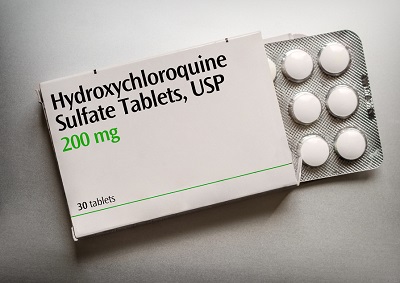
Hydroxychloroquine sulfate has not been approved for the treatment of COVID-19. It has been used experimentally to treat certain people with COVID-19, including hospitalized patients. Hydroxychloroquine sulfate is being used to try and stop the COVID-19 virus from spreading inside your body. This may help you to get better.
Hydroxychloroquine sulfate is experimental because we do not know if it works for COVID-19. It is not approved by FDA for the treatment of COVID-19, but emergency use has been authorized for adults and adolescents who weigh 50 kg (110 pounds) or more and are hospitalized with COVID-19 if a clinical trial is not available or you are not able to participate in a clinical trial. There is limited information known about the safety and effectiveness (whether this will make you better) of using hydroxychloroquine sulfate for hospitalized patients with COVID-19.
화학적 성질
White Cyrstalline Solid용도
Hydroxychloroquine Sulfate can be used as a pharmaceutical secondary standard for the determination of the analyte in pharmaceutical formulations, and biological samples by various analytical techniques.These Secondary Standards are qualified as Certified Reference Materials. These are suitable for use in several analytical applications including but not limited to pharma release testing, pharma method development for qualitative and quantitative analyses, food and beverage quality control testing, and other calibration requirements.
일반 설명
Hydroxychloroquine Sulfate (Hydroxychloroquine Sulphate) is a salt of hydroxychloroquine (HCQ, Plaquenil), a 4-aminoquinoline based antiviral drug.Pharmaceutical secondary standards for application in quality control provide pharma laboratories and manufacturers with a convenient and cost-effective alternative to the preparation of in-house working standards.
Pharmacology
Antimalarial action: Hydroxychloroquine binds to DNA, interfering with protein synthesis. It also inhibits DNA and RNA polymerases. It’s active against asexual erythrocytic forms of Plasmodium malariae, P. ovale, P. vivax, and many strains of P. falciparum.Amebicidal action: Mechanism of action is unknown.
Anti-inflammatory action: Mechanism of action is unknown. Drug may antagonize histamine and serotonin and inhibit prostaglandin effects by inhibiting conversion of arachidonic acid to prostaglandin F2; it may also inhibit chemotaxis of polymorphonuclear leukocytes, macrophages, and eosinophils.
Pharmacokinetics
Absorption: Absorbed readily and almost completely.Distribution: Bound to plasma proteins. It’s concentrated in the liver, spleen, kidneys, heart, and brain and is strongly bound in melanin-containing cells.
Metabolism: Metabolized by the liver to desethylchloroquine and desethyl hydroxychloroquine.
Excretion: Most of an administered dose is excreted unchanged in urine. Drug and its metabolites are excreted slowly in urine; unabsorbed drug is excreted in feces. Small amounts of drug may be present in urine for months after it’s discontinued. Drug appears in breast milk.
Clinical Use
Hydroxychloroquine sulfate is highly water soluble and exists in two different forms of different melting points. It is readily absorbed on oral administration, reaching peak plasma levels within 1 to 3 hours. It concentrates in organs such as the liver, spleen, kidneys, heart, lung, and brain, thereby prolonging elimination. Hydroxychloroquine is metabolized by N-dealkylation of the tertiary amines, followed by oxidative deamination of the resulting primary amine to the carboxylic acid derivative. In addition to possessing corneal and renal toxicity, hydroxychloroquine also may cause CNS, neuromuscular, GI, and hematological side effects. Hydroxychloroquine sulfate is indicated for the treatment of rheumatoid arthritis, lupus erythematosus, and malaria.부작용
In addition to possessing corneal and renal toxicity, hydroxychloroquine also may cause CNS, neuromuscular, GI, and hematological side effects. Hydroxychloroquine sulfate is indicated for the treatment of rheumatoid arthritis, lupus erythematosus, and malariaOverdosage
Symptoms of drug overdose may appear within 30 minutes after ingestion and may include headache, drowsiness, visual changes, CV collapse, and seizures followed by respiratory and cardiac arrest.Treatment is symptomatic. Empty stomach by emesis or lavage. After lavage, activated charcoal in an amount at least five times the estimated amount of drug ingested may be helpful if given within 30 minutes of ingestion.
Ultra-short-acting barbiturates may help control seizures. Intubation may become necessary. Peritoneal dialysis and exchange transfusions may also be useful. Forced fluids and acidification of the urine are helpful after the acute phase.
Drug interactions
Anti-arrhythmics: increased risk of ventricular arrhythmias when hydroxychloroquine administered with amiodarone – avoid concomitant useDigoxin: Hydroxychloroquine sulfate has been reported to increase plasma digoxin levels: serum digoxin levels should be closely monitored in patients receiving concomitant therapy.
Antibacterials: increased risk of ventricular arrhythmias when hydroxychloroquine administered with moxifloxacin – avoid concomitant use.
Ciclosporin: hydroxychloroquine increases plasma concentration of ciclosporin (increased risk of toxicity) .
Antacids: as with chloroquine, antacids may reduce absorption of hydroxychloroquine so it is advised that a 4 hour interval be observed between hydroxychloroquine and antacid dosaging.
Antidiabetic medicines: As hydroxychloroquine may enhance the effects of hypoglycaemic treatment, a decrease in doses of insulin or antidiabetic drugs may be required.
Tamoxifen: may enhance the adverse/toxic effect of Hydroxychloroquine. Specifically, concomitant use of tamoxifen and hydroxychloroquine may increase the risk of retinal toxicity.
Hydroxychloroquine sulfate 준비 용품 및 원자재
원자재
준비 용품
Hydroxychloroquine sulfate 공급 업체
글로벌( 722)공급 업체
| 공급자 | 전화 | 이메일 | 국가 | 제품 수 | 이점 |
|---|---|---|---|---|---|
| Jiangsu Orlisi Pharmaceutical Co., Ltd | 15950720386 |
3831571340@qq.com | China | 400 | 58 |
| Shanghai Luofa Biochemical Technology Co., Ltd. | 021-51111890 15317326293 |
sales@molnova.com | China | 4183 | 58 |
| Shanghai jing Hao pharmaceutical technology co., LTD | 021-68900963 15618693615 |
sales@jinghaopharma.com | China | 300 | 58 |
| Guangzhou Dihao Medical Technology Co., Ltd | 18602015453 |
2667751176@qq.com | China | 479 | 58 |
| Zhengzhou Baiyu Pharmaceutical Co., Ltd | 13938569199 |
baiyu@163.cn | China | 391 | 58 |
| Chongqing Xing'enlian Pharmaceutical Co., Ltd. | 023-67382115 13996273682 |
51383609@qq.com | China | 7 | 58 |
| HuBei VernalBay Biopharmaceutical Co., Ltd. | 17371337933 17371337933 |
3495784513@qq.com | China | 20 | 58 |
| Nanjing Yiming Pharmaceutical Technology Co., Ltd. | 19850700912; 19850700912 |
13851286085@163.com | China | 1000 | 58 |
| J & K SCIENTIFIC LTD. | 18210857532 18210857532 |
jkinfo@jkchemical.com | China | 96815 | 76 |
| Meryer (Shanghai) Chemical Technology Co., Ltd. | 4006356688 18621169109 |
market03@meryer.com | China | 40202 | 62 |